Dual Wall Plate Heat Exchanger
original price: 20,00 USD


Jason Zhuo
Contact person
Basic Information
| Place of Origin | Zhejiang China (Mainland) |
|---|---|
| Brand Name | HRALE |
| Model Number | B3-32DW |
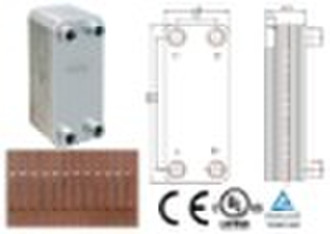
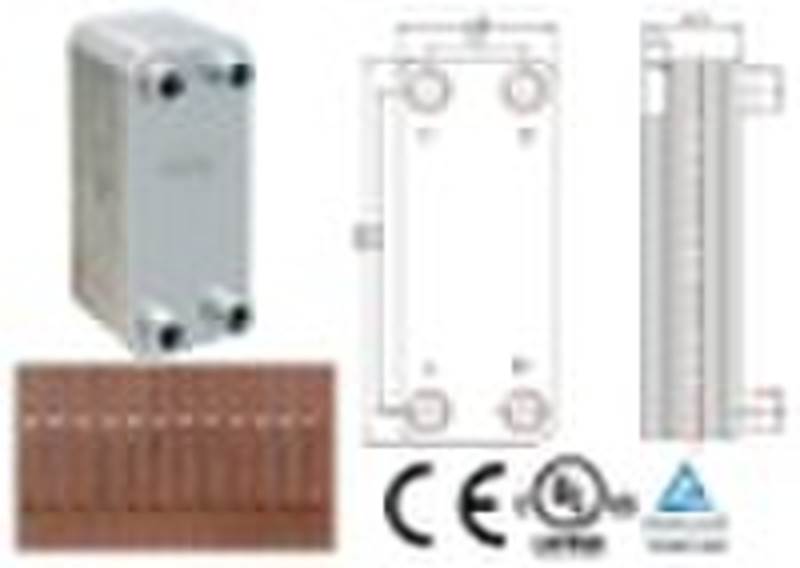
Technical parameterProduct nameDouble Wall Brazed Plate Heat Exchanger, Dual Wall Plate Heat Exchanger, Dual Wall Heat Exchanger,CE, UL, TUV,ISO9001:2000Product modelB3-32DWUnit heatexchanging area0.032m2Maximum flowrate12m3/hPlatematerial316L or 304 stainless steelWelding material99.9% copperPlate thickness0.4mm+0.4mmVolume per channel0.05LMaximum number of plate 80Design pressure3.0MPa or4.5MPa Test pressure4.5MPa or6.0MPaDesign temperature-195 +220 Connectionsthe biggest screw thread pipefor water: 1", the biggest welded pipe for liquid:11/8" Refrigeration Capacity5-20KWBasic ProceduresF1-> F3F4-> F2 Application scopeAdvantages of Double Wall Brazed Plate Heat Exchangers: In applications with particularly stringent safety requirements, when unlikely event of internal leakage occurs, traces of one of the two medium can always been seen from the portholes between the pair plates on the outside of the plate heat exchanger, which thus can be replaced immediately. Double wall brazed plate heat exchanger is the perfect choice to prevent the risk from the intermixing of two fluids. Double wall brazed plate heat exchanger makes the application of plate heat exchanger safer and more environment-friendly. How Heat Transfer WorksHeat transfer occurs when there is a difference in temperature between two mediums. Heat will travel from the hot source to the cold source. The rate at which the heat transfer occurs at is determined by many factors such as the heat conductivity of the two materials andthe difference in temperatures of the two mediums. Convectiuve heat transfer occurs when the materials are moving against each other. Plate heat exchangers have significantly good heat transfer rates because they use metal plates which have high heat conductivity rates and the plates are extremely thin. The plate heat exchangers also achieve high amounts of heat transfer through convective forces with both working fluids. With large temperature differentials, great amounts of heat transfer can be achieved using a plate heat exchanger. CorrosionCorrosion is usually how these units will fail. Use fluids with reasonable pH levels to ensure a long lasting life. Hard water will corrode faster than regular water. (Use distilled if possible; Distilled should never corrode it) Salt water will corrode stainless steel very fast. It is recommended to clean the exchanger often if you are using corrosive fluids. Normal usage (non-corrosive fluids) should expect 10-20 years of life. Fluids containing chlorides will corrode the unit quickly. ApplicationsThis is an extremely popular unit for wood burning furnaces, radiant floor systems, refrigerant systems, straight vegetable oil conversions, beer chilling, air conditioning system and solar water heating systems. It will work for any application in which the desired result is for two fluids (liquid or gas) to exchange heat. How it WorksFluid A passes from the port on the left of the heat exchanger through every other channel created by the plates to the opposite end port on the left of the heat exchanger (looking at it the long way). Fluid B passes from the port on the right through the other channels created by the plates and comes out the other port on the right side. The fluids are essentially touching each other through the plates and heat is transferred from the hot fluid to the cold fluid. (but the fluids do not mix)
Delivery terms and packaging
Packaging Detail: CARTON BOX, WOODEN BOX, METAL PALLET Delivery Detail: 2 WEEKS
Port: NINGBO
Payment term
Letter of credit
Telegraphic transfer

-
Payment Methods
We accept: